
A perfect smile is often considered part of a celebrity’s image. From movie premieres and television appearances to magazine covers and social media, celebrities are constantly seen smiling for cameras. But even polished smiles are not completely protected from dental problems, including gum recession.
The topic of celebrity receding gums has attracted attention because it highlights something many people forget: celebrities can experience the same dental concerns as everyone else. Receding gums can gradually change a smile’s appearance, increase tooth sensitivity, and expose parts of the teeth normally protected by gum tissue.
Understanding why gums recede is more useful than simply looking at Celebrity smiles. Whether someone works in front of cameras or wants to protect their teeth, knowing the warning signs and treatment options can make a significant difference.
What Are Receding Gums?
Receding gums, also called gingival recession, happen when the gum tissue gradually pulls away from the tooth. This can expose more of the tooth surface and, in some cases, part of the tooth root.
A healthy gumline provides protection around the teeth. When the gum moves downward or away from the tooth, the exposed area may become more sensitive. Some people notice discomfort when drinking something cold or hot, while others first notice that their teeth appear longer than they used to.
Gum recession usually develops gradually, which means it may not be obvious at first. Regular dental exams are therefore important, especially if someone notices changes around the gumline.
Why Do Celebrity Receding Gums Get So Much Attention?

Celebrities are photographed more frequently than most people. A small change in a smile that might go unnoticed in everyday life can become much more visible in close-up photographs, interviews, advertisements, or films.
However, photographs alone cannot confirm receding gums. Lighting, camera angles, makeup, cosmetic dentistry, natural tooth shape, and image editing can all affect how a smile appears.
For this reason, it is important to distinguish between visible changes and an actual dental diagnosis. Only a qualified dental professional can properly evaluate whether gum recession is present and determine its cause.
The broader lesson behind celebrity receding gums is that an attractive smile does not necessarily mean the gums are perfectly healthy. Gum health deserves as much attention as the appearance of the teeth.
What Causes Receding Gums?
Gum recession rarely has just one cause. Several factors can contribute to changes in the gumline.
Gum Disease and Inflammation
Periodontal disease is an important cause of damage to the tissues that support the teeth. Plaque buildup can lead to inflammation around the gums. If gum disease progresses without proper treatment, it can affect the tissues and bone that support the teeth.
This is one reason maintaining good oral hygiene matters. Regularly removing plaque and getting professional dental care can help reduce the risk of gum-related problems.
Brushing Too Aggressively
Many people assume that brushing harder makes their teeth cleaner. In reality, excessive pressure can irritate the gums and contribute to wear around the gumline.
A soft-bristled toothbrush and gentle technique are generally preferable to aggressive scrubbing. The goal is to remove plaque effectively without irritating the gums.
Genetics and Natural Gum Tissue
Not everyone has the same gum thickness or oral anatomy. Some people naturally have thinner gum tissue, which may make certain areas more susceptible to recession.
This means that even someone who follows a careful oral hygiene routine may still experience gum recession. Genetics and individual anatomy can play a role, so regular dental examinations remain useful.
Tobacco Use
Tobacco use can have a negative effect on oral health and is associated with an increased risk of gum disease. Because periodontal problems can contribute to gum recession, avoiding tobacco helps protect the gums.
Poor Oral Hygiene
When plaque remains around the teeth and gumline for long periods, it can contribute to inflammation and gum disease. Inadequate brushing and flossing can therefore increase the risk of gum problems over time.
Good oral hygiene isn’t about a celebrity-style cosmetic routine. It starts with consistent, everyday care.
What Are the Signs of Gum Recession?
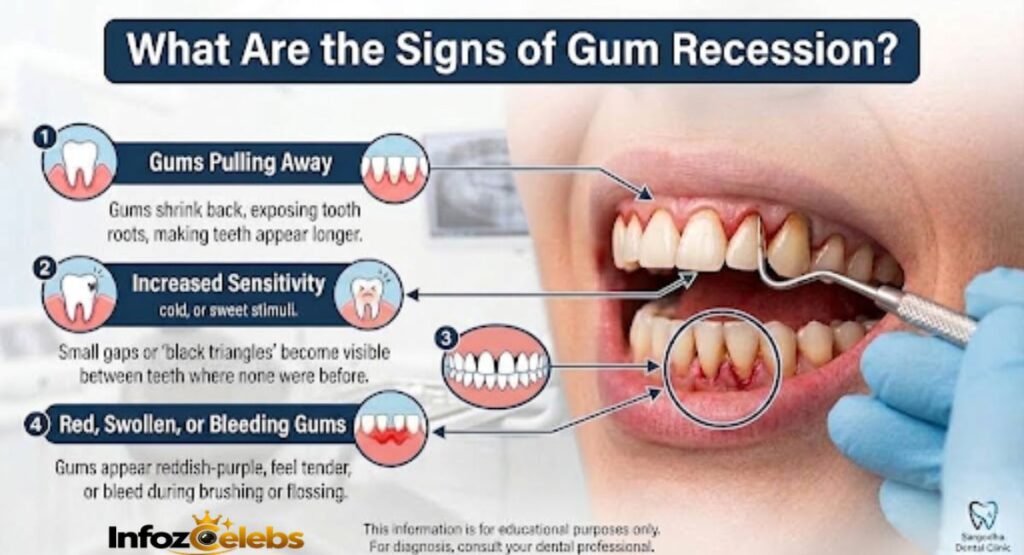
One challenging aspect of gum recession is that it may not cause obvious symptoms in its early stages. A person may simply notice that one tooth looks slightly longer than another.
Tooth sensitivity can also be an early warning sign. If previously tasty foods or drinks suddenly cause sharp sensations, exposed tooth surfaces may be the cause.
Other changes can include a visibly lower gumline, increased sensitivity near the gums, or noticeable differences between the appearance of neighbouring teeth.
Don’t diagnose gum recession based on one symptom alone. Sensitivity and changes in the gumline can have several possible causes, so a dental examination is the best way to identify the underlying issue.
Some common signs to watch for include:
- Teeth that appear longer than they previously did.
- Increased sensitivity, especially when consuming hot or cold foods and drinks.
Can Receding Gums Affect the Appearance of a Smile?
Yes. Because the position of the gums influences the balance between the teeth and surrounding tissue, recession can change how a smile looks.
When more of a tooth becomes visible, it may appear longer. If recession affects only one or two teeth, the gumline may also look uneven.
For celebrities and others who regularly appear in photographs, these changes can draw more attention. But the cosmetic aspect is only part of the issue. Gum health and supporting structures matter more than achieving a particular appearance.
Can Receding Gums Grow Back Naturally?
A common question surrounding gum recession is whether the lost gum tissue will grow back on its own. Generally, gum tissue that has physically receded does not naturally return to its original position.
That does not mean nothing can be done.
Treatment can focus on identifying and controlling the cause of recession, protecting the exposed area, and preventing progression. In selected cases, a dental specialist may recommend a procedure such as gum grafting to restore coverage around an exposed root.
The best approach depends on the severity of the recession, the condition of the surrounding gums, and the cause.
How Are Receding Gums Treated?
Treatment for gum recession varies from person to person. A dentist or periodontist first needs to determine why the recession is occurring.
If gum disease is involved, treatment may focus on controlling infection and inflammation. If aggressive brushing contributes to the problem, changing your brushing technique can help prevent further irritation.
Professional dental cleaning may also be recommended when plaque or tartar is contributing to gum inflammation. In more advanced cases, a periodontal specialist may discuss surgery.
Receding Gums: Common Signs, Causes, and Treatment
| Aspect | What You May Notice | Common Cause | Possible Approach |
| Tooth Sensitivity | Pain or sharp sensation from hot or cold foods | Exposed tooth surface | Dental evaluation and sensitivity management |
| Longer-Looking Teeth | Teeth appear longer than before | Gum tissue has moved away from the tooth | Identify and treat the cause of recession |
| Visible Gumline Changes | Uneven or lower gumline | Gum recession, genetics, or gum disease | Professional dental examination |
| Bleeding Gums | Blood while brushing or flossing | Gum inflammation or periodontal disease | Improved oral hygiene and professional treatment |
| Exposed Tooth Root | Part of the tooth root becomes visible | More advanced gum recession | Evaluation by a dentist or periodontist |
| Gum Disease | Swelling, bleeding, tenderness, or changes around gums | Plaque buildup and periodontal infection | Professional periodontal care |
Gum Grafting
Gum grafting is one treatment that may be considered for certain cases of significant recession. During the procedure, the dentist uses tissue to increase gum coverage around an affected tooth or area.
Gum grafting is a professional dental procedure and is not appropriate for every case of recession. A periodontist can determine whether it is suitable after examining the patient’s gums and teeth.
How Can You Protect Your Gums?
Protecting your gums starts with simple habits, not expensive cosmetic treatments. Brushing twice a day with a soft-bristled toothbrush can help remove plaque while minimising unnecessary irritation.
Flossing, or cleaning between your teeth, is also important because a toothbrush cannot effectively reach every surface. Regular dental visits let a professional identify plaque buildup, gum inflammation, recession, or other concerns before they become harder to manage.
Your brushing technique matters as much as how often you brush. Gentle, controlled movements are preferable to aggressive scrubbing. If you are unsure whether your technique is appropriate, ask your dentist or dental hygienist to demonstrate it.
Lifestyle choices also matter. Avoiding tobacco and maintaining a balanced diet can support overall oral health. Staying consistent with these habits is more valuable than relying on occasional intensive dental care.
Simple habits that can support healthier gums include:
- Using a soft-bristled toothbrush and gentle brushing technique
- Cleaning between your teeth regularly and attending routine dental checkups.
What Can We Learn From Celebrity Smile Care?

The fascination with celebrity receding gums can remind us that a beautiful smile involves more than white teeth. Healthy gums are essential to a healthy mouth.
Celebrities may have access to professional dental teams, cosmetic dentistry, and frequent appointments, but the basic principles of gum care remain the same. Regular cleaning, proper brushing, professional exams, and early attention to dental problems matter for everyone.
Cosmetic procedures also do not necessarily address the underlying causes of gum disease or recession. A smile can look excellent while still requiring proper periodontal care.
When Should You See a Dentist?
Consider speaking with a dentist if you notice your gums moving away from your teeth, your teeth looking unusually long, or persistent sensitivity.
Bleeding gums, swelling, discomfort, or changes that continue over time should also be evaluated rather than ignored. Early attention can help address problems before they become more difficult to manage.
A dental professional can examine your gumline, check for signs of periodontal disease, evaluate the supporting tissues, and recommend treatment based on your specific situation.
The earlier you identify a potential problem, the easier it may be to manage the factors contributing to it.
Celebrity Receding Gums: Appearance vs Oral Health
The conversation around celebrity receding gums often focuses on appearance, but gum recession is ultimately a dental health issue.
A celebrity’s smile may look different from one photograph to another, but appearance alone cannot establish whether recession exists. Professional diagnosis is essential.
For everyone else, the more useful takeaway is to watch your own gums. Changes in the gumline, sensitivity, bleeding, and other unusual symptoms should not be dismissed simply because they seem minor.
Healthy gums provide an important foundation for a healthy smile, and protecting them requires consistent care over time.
Final Thoughts
Celebrity receding gums shows that even highly visible smiles can be affected by ordinary dental concerns. Gum recession can have multiple causes, including periodontal disease, aggressive brushing, genetics, tobacco use, and inadequate oral hygiene. Because the condition can develop gradually, recognising changes early is important.
Although celebrities may invest heavily in maintaining their smiles, healthy gums do not depend entirely on cosmetic treatments. Gentle brushing, cleaning between teeth, regular dental checkups, and healthy lifestyle habits can all support better gum health.
If you notice a changing gumline, increased sensitivity, bleeding, or another unusual symptom, professional dental advice is the safest way to understand what is happening. Caring for your gums isn’t only about a better-looking smile—it is about protecting your oral health for years to come.
Conclusion
Celebrity receding gums highlight an important fact about oral health: even people known for beautiful, camera-ready smiles can experience gum-related problems. Gum recession can develop for different reasons, including gum disease, genetics, aggressive brushing, tobacco use, and poor oral hygiene. Because it can progress gradually, it’s important to notice changes in the gumline or increased tooth sensitivity early.
Maintaining healthy gums does not require a celebrity lifestyle. Gentle brushing, regular interdental cleaning, professional dental checkups, and healthy daily habits can help protect the gumline. If you notice visible recession, persistent sensitivity, bleeding, or other unusual changes, consulting a dentist can help identify the cause and determine the appropriate treatment. A healthy smile starts with healthy gums, so taking care of them should always be part of your long-term dental routine.
FAQs
1. What are celebrity receding gums?
Celebrity receding gums refers to gum recession discussed in relation to celebrities or highly visible smiles. In this context, the term means gums that appear to have receded, but a person’s gum condition cannot be reliably diagnosed from photographs alone. A dental professional must examine the gums to determine whether recession is actually present.
2. What causes receding gums?
Receding gums can have several causes, including gum disease, aggressive brushing, genetics, tobacco use, and inadequate oral hygiene. In some people, the natural thickness and position of their gum tissue can also make certain areas more vulnerable to recession.
3. Can receding gums grow back naturally?
Generally, gum tissue that has already receded does not naturally grow back on its own. However, treatment can address the underlying cause and help prevent further recession. In some cases, a dentist or periodontist may recommend procedures such as gum grafting.
4. Are receding gums only a cosmetic problem?
No. Although gum recession can change the appearance of a smile, it can also expose more of the tooth surface and contribute to sensitivity. Depending on the cause and severity, untreated gum problems may also affect overall periodontal health.
5. How can I prevent receding gums?
Good oral hygiene can help protect your gums. Brush gently with a soft-bristled toothbrush, clean between your teeth regularly, avoid tobacco, and maintain routine dental checkups. If you notice changes in your gumline or persistent sensitivity, seek professional dental advice.

