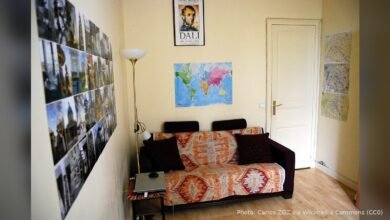
A small apartment does not need expensive furniture to look finished. It needs editing, light and a few pieces that each do more than one job. Most rooms that feel cramped are not short of money spent — they are short of a plan: too many small objects competing for attention, one harsh ceiling light, curtains hung low, and storage spread across the floor instead of up the walls. Fix those four things first and the same room starts to look calm and considered. That is the same less-but-better logic behind minimalist lifestyle tips for beginners, applied to one room at a time.
The Plan at a Glance
Work in this order. The free moves come first because they change how the room feels before you spend anything.
| Move | Cost Level | What It Changes |
|---|---|---|
| Edit and rearrange | Free | Space, calm and what the room needs |
| Shop your own home | Free | Fresh pieces from other rooms |
| Light colours, curtains hung high | Low | Brightness and a taller feel |
| Layered lighting | Low | How the room feels every evening |
| One large mirror | Low to moderate | Light and a sense of depth |
| Vertical and closed storage | Low to moderate | Floor space and visual quiet |
| Cushion covers, throw and rug | Moderate | Colour, softness and finish |
1. Edit Before You Buy Anything
Start by taking everything off the surfaces — tables, shelves, counters and the corners where things gather. Put back only what you use or like looking at. In a small room, every visible object takes up mental space as well as physical space, so a clear surface reads as calm even when the room itself is tiny.
Then rearrange what remains. Pull seating into a group close enough for conversation instead of pushing every piece against the walls, and keep walkways clear. Moving pieces costs an afternoon, yet it often changes a room more than a new purchase would. Finally, shop your own home before you shop anywhere else: a lamp from a hallway, a chair from a bedroom or a framed print from a drawer may be exactly what the living room is missing.
2. Let Light Do the Heavy Lifting
Light is the cheapest way to make a small room feel bigger. Pale, warm colours on walls and large pieces reflect light back into the room, while dark surfaces absorb it and make walls feel closer. You do not need a full repaint to use this: light cushion covers, a pale throw or sheer curtains can shift the balance of a room you cannot paint.
Windows matter just as much. Keep them clean and unobstructed, choose light or sheer curtains where privacy allows, and hang the rod high and wide — close to the ceiling and beyond the frame — with fabric that falls toward the floor. The eye reads that extra height as a taller window and a taller room.
After dark, one ceiling light makes almost any room look flat. Add light at different heights instead: a floor lamp beside the sofa, a table lamp on a side table, and warm-white bulbs so the room feels soft rather than stark. Designers return to this layered approach, as in Parade's roundup of budget-friendly decorating hacks designers swear by, where ambient, task and accent light together create depth a single overhead bulb cannot.
3. Use Mirrors and Walls Well
A mirror does one useful thing: it reflects whatever faces it. Place a large mirror opposite a window or light source and it bounces daylight around the room while suggesting the space continues past the wall. Place it opposite a cluttered shelf and it doubles the clutter instead. Size matters more than the frame — one large mirror reads as part of the room, while several tiny ones look scattered. Thrift shops and second-hand listings are often the cheapest source of oversized frames.
Walls are storage you have already paid for. Tall shelving and wall-mounted shelves take up little floor space and draw the eye upward, making a ceiling feel higher. The same applies to art: one large piece, or a grouped arrangement planned on the floor first, looks finished. Small pictures scattered widely usually look unfinished.
4. Choose Furniture That Earns Its Place
In a small apartment, every piece should hold a second job. A storage ottoman can be a footrest, extra seat and a place to hide blankets. A narrow console can hold keys and double as a desk. A tall bookcase stores as much as a wide sideboard while using a fraction of the floor. When you do buy, measure first and choose pieces scaled to the room — oversized furniture is the fastest way to make a small space feel smaller.
Keep everyday items in closed storage. Baskets, boxes and drawers hide remotes, chargers and paperwork, and quiet surfaces look more expensive than everything on display. A rug helps too, at the right size: one large enough for the front legs of the main furniture to sit on pulls a seating area together, while a small floating rug makes the room feel chopped up.
5. Finish With Textiles and Small Details
Fabric is the fastest finish. Change cushion covers rather than whole cushions, add a throw in a texture the room lacks, and repeat one or two colours across the textiles so the room reads as a single scheme instead of a collection of leftovers. A plant adds life; choose varieties that match the light you actually have.
Renters should keep changes reversible: swap cushion covers, lampshades and curtain panels freely, and check your lease before paint or anything fixed to walls. In a rental, the free moves — editing, rearranging, lighting and textiles — usually deliver most of the improvement anyway.
A One-Weekend Order of Work
| When | Task |
|---|---|
| Saturday morning | Clear surfaces, edit objects, rearrange furniture, shop your own home |
| Saturday afternoon | Clean windows, rehang curtains high and wide, plan mirror and shelves |
| Sunday morning | Add or move lamps, swap warm bulbs, place the mirror opposite light |
| Sunday afternoon | Closed storage, cushion covers and throw, one plant, final edit |
Stop at the end of the weekend and live with the room for a week before buying anything else. The pause stops impulse buys that solve a problem the edit already fixed.
Practical Takeaways
- Edit first, buy last. Clearing and rearranging costs nothing and changes the most.
- Light opens a room. Use pale colours, daylight and curtains hung high and wide.
- Layer your lighting. Two lamps with warm bulbs beat one ceiling light.
- One large mirror, facing light. It adds depth; small scattered mirrors add noise.
- Store upward and behind doors. Vertical, closed storage returns floor space.
- Textiles finish the room. Cushion covers, a throw and a right-sized rug feel intentional.
Frequently Asked Questions
How can I make a small apartment look bigger without renovating?
Edit clutter, use light colours where you can, let in daylight, place a large mirror opposite a window, and move storage up the walls. None of these changes the size of the room, but together they change how large it feels.
What is the cheapest change with the biggest impact?
Clearing surfaces and rearranging furniture. Both are free, and both change how a room works and feels before you spend anything. After that, lighting — an extra lamp and warm bulbs — usually delivers the most change for the least money.
What colours work best in a small room?
Warm, pale neutrals such as off-white, cream, soft grey and beige reflect light and make walls feel further away. Deeper colour still works in cushions, a throw or one piece of art; the large surfaces set the sense of space.
Where should I place a mirror in a small apartment?
Opposite a window or a light source, so it reflects daylight and a view rather than clutter. One large mirror hung or leaned against a wall works better than several small ones spread around the room.
How do I decorate a rental apartment on a budget?
Stick to reversible changes: editing, rearranging, lamps, cushion covers, throws, curtains on existing rods, and freestanding or leaning mirrors and shelves. Check your lease before paint or wall fixings.
How do I stop a budget room from looking cheap?
Choose fewer, larger things over many small ones, repeat a limited colour palette across textiles, keep surfaces mostly clear, and light the room in layers with warm bulbs. A room looks expensive when it looks deliberate, and deliberateness is mostly editing.
Final Thoughts
Decorating a small apartment on a budget is less about bargains than about spending in the right order. Edit first, let light do the heavy lifting, use mirrors and walls with intent, choose furniture that earns its place, and finish with textiles. Done in that sequence, a small room stops feeling like a compromise and starts feeling like a choice.
Also read